I remember the moment it hit me—wiping down desks and surfaces with the same old disinfectant, only to notice that the sticky residue remained and the germs seemed to multiply faster than I could clean. It was a lightbulb moment that made me realize many of us are stuck in a cleaning rut that undermines our health, especially in shared office spaces. As someone who’s navigated the chaos of maintaining a pristine workplace, I know firsthand how frustrating it can be to feel confident about your cleanliness routine when visible results are elusive.
Why Standard Cleanings Fall Short in a 2026 Workspace
In 2026, the office environment has become a battleground against unseen pathogens—viruses, bacteria, mold, and allergens lurking in every corner. Traditional cleaning methods often miss these nasty culprits, leaving your workspace not as germ-free as you’d hope. Did you know that according to a report by the CDC, pathogens can survive on surfaces for days? That means a quick wipe isn’t enough; you need targeted, foolproof strategies to truly eliminate germs from your office. If you’re tired of spreading or catching illnesses, it’s time to rethink your cleaning approach.
Is Office Cleaning Really Worth the Hype?
I used to believe that a quick sweep and some spray were enough. Early on, I made the mistake of thinking that cleanliness was about surface shine rather than sterilization. But it’s this misconception that hampers actual germ elimination. Changing my perspective and adopting more rigorous, science-backed cleaning routines dramatically improved my workspace’s health. If you’re skeptical, I get it—trust me, I’ve been there. But the evidence shows that strategic cleaning materially reduces the spread of colds and flu—crucial in our post-pandemic world. Curious how to elevate your routine? I’ll guide you through proven fixes that work, supported by deep cleaning secrets you can learn more about at this comprehensive guide.
Now, let’s dive into the four powerful fixes that will transform your office cleaning routine into a germ-fighting powerhouse, ensuring your workspace is safe, healthy, and trustworthy for everyone who walks through the door.
Start by isolating high-touch surfaces—door handles, keyboard keys, light switches—these are your germ hotspots. Use a microfiber cloth dipped in an effective disinfectant, preferably one backed by trusted sanitizing methods, to thoroughly wipe these areas. I vividly remember my messy attempt to clean my office desk, where I concentrated only on visible dust and ignored the germs lurking underneath objects—leading to minimal results. Applying this targeted method ensures germs don’t just move around but are eliminated at their source.
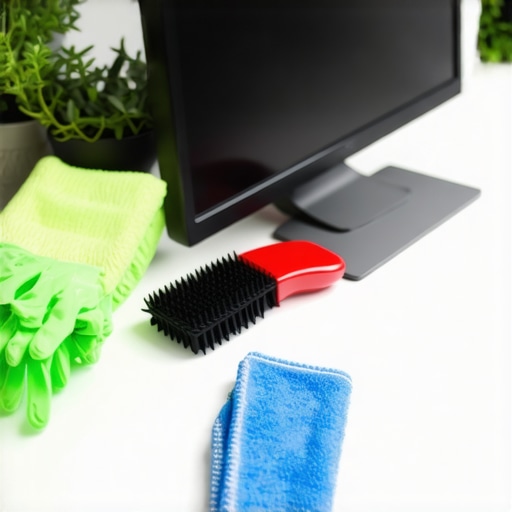
Gather all necessary cleaning supplies: EPA-approved disinfectants, microfiber cloths, gloves, and protective gear. Avoid harsh chemicals that can damage surfaces or leave residues; instead, opt for eco-friendly options aligned with effective sanitizing strategies. Remember, a well-prepared cleaning kit turns a daunting task into an efficient routine. I learned this during a weekend cleaning spree where I initially skipped proper protective gear, resulting in skin irritation—but once I suited up, my work became safer and more thorough. For an in-depth guide on selecting the best cleaning supplies, check out this resource.
Deep Sanitize Your Details
Next, focus on disinfecting areas often overlooked—inside drawers, beneath keyboards, behind monitors. Use approved disinfectant sprays or wipes, allowing proper contact time to kill pathogens effectively. Think of this step as giving your space a vitamin shot—boosting immunity by eliminating unseen threats. I once cleaned my office by quickly wiping surfaces but missed the hidden spills under computer cords, which became a breeding ground for germs. Deep cleaning and sanitizing these hidden spots prevent future contamination, especially since pathogens can survive for days on surfaces if not thoroughly disinfected. For advanced deep cleaning techniques, explore this detailed guide.
Floors often hide dust, dirt, and allergens—vacuum high-traffic areas thoroughly, utilizing HEPA filters for maximum particle removal. If your office has carpets, consider steam cleaning to kill lurking bacteria and molds; for hard floors, mop with a disinfectant that aligns with trusted sanitizing methods. Couch cushions or chairs should also be cleaned with appropriate fabric disinfectants to prevent allergen buildup. During one cleaning session, I realized that neglecting under desks allowed accumulated dust and mites, undermining the entire cleanliness effort. Regular, methodical cleaning ensures these spaces don’t become reservoirs for germs or allergens, improving overall health. For expert cleaning strategies, refer to this guide.
Master Air Quality and Ventilation
Good air circulation is critical in reducing airborne pathogens. Use HEPA filters on your HVAC systems, open windows when possible, and ensure air purifiers are functioning correctly. Incorporate UV-C sterilizers if feasible—they actively destroy germs in the air and on surfaces. Think of this process as giving your workspace a breath of fresh, germ-free air—reducing the risk of airborne illnesses. I remember installing an air purifier with UV sterilization, which noticeably improved my office’s air quality within days. Maintenance of ventilation systems is essential; clogged filters can trap bacteria and fungi, negating your cleaning efforts. For detailed strategies on maintaining optimal air quality, look into this resource.
Implement Ongoing Maintenance
Deep cleaning is not a one-time fix—it’s an ongoing process. Schedule daily quick wipes for high-touch surfaces and weekly comprehensive deep cleans. Use checklists to ensure no area gets overlooked. Incorporate sanitizing protocols into your daily work routine—like disinfecting phones every few hours or cleaning shared devices. Consistency keeps germs at bay, making your office a healthier place to work. I once tried to skip regular cleaning, and within days, complaints about stuffy, dusty air surfaced among colleagues. Establishing a routine transformed my workspace from an under-maintained zone to a health fortress. For professional insights on sustainable cleaning schedules, explore this guide.
While many believe that merely disinfecting surfaces is enough to ensure a truly clean space, this misconception often masks the complex realities of effective sanitation. A common myth is that cleaning with generic disinfectants is universally effective—however, the truth is that the choice and application of disinfectants require nuanced understanding. For instance, not all disinfectants are effective against every pathogen, and misusing them can create a false sense of security, allowing germs to survive and proliferate. Experts like those at this trusted resource emphasize the importance of selecting EPA-approved products tailored for specific pathogens, which is often overlooked by the average cleaner.
Why Do Surface Wipes Sometimes Fail?
One frequent mistake is relying solely on surface wipes or sprays without allowing sufficient contact time. Many users spray disinfectant and wipe immediately, unaware that most disinfectants require a certain period—often 2 to 10 minutes—to effectively kill germs. This rush compromises the disinfectant’s efficacy and leaves surfaces vulnerable. Moreover, surface type matters: porous materials like fabric or wood may require different cleaning approaches than non-porous surfaces. Recognizing these nuances can make the difference between a genuinely sanitized workspace and one that looks clean but harbors hidden pathogens. For an advanced understanding of sanitation techniques, explore this comprehensive guide.
How Can Overlooking Hidden Areas Sabotage Your Efforts?
Many underestimate the importance of deep cleaning beyond visible surfaces. Bacteria, mold, and allergens often settle in overlooked spots—inside air vents, behind appliances, or under furniture—protecting these harmful agents from routine cleaning. Failure to address these areas leads to recontamination and undermines the entire cleaning process. Advanced practitioners routinely focus on these hidden zones, employing tools like UV-C sterilizers or steam cleaners to eradicate stubborn germs. Incorporating such techniques, as discussed at this site, elevates cleaning from superficial to professional-grade. Remember, the devil’s in the details—failing to get these spots can trap pathogens and allergens, especially in high-moisture environments.
Another common misconception is equating cleaning frequency with quality. More frequent cleaning doesn’t necessarily mean better results if the methods are superficial. Instead, a strategic, nuanced approach that includes surface preparation, product selection, contact time, and attention to hidden spots ensures comprehensive sanitation. Deep cleaning isn’t just scrubbing floors or wiping counters; it’s an art that combines science and technique to create a healthier environment. To master these advanced practices, I recommend reviewing this detailed guide.
Understanding these subtle distinctions elevates your cleaning routine from routine maintenance to a true health safeguard. Do you know the hidden spots in your space that could harbor bacteria? Have you ever fallen into this trap? Let me know in the comments and share your experiences!
Maintaining a pristine and sanitized environment requires more than just good intentions; it demands the right tools and a strategic approach. Over the years, I’ve discovered that investing in specialized equipment significantly enhances the longevity of cleaning results and makes the process more efficient.
Prioritize High-Quality Disinfectant Sprayers
Without a doubt, my go-to device is a commercial-grade electrostatic sprayer. Unlike traditional spray bottles, this technology atomizes disinfectants into fine particles that wrap around surfaces evenly, ensuring thorough coverage—even in hard-to-reach areas. Personally, I rely on models like the Clorox Electrostatic Sprayer, which offers adjustable settings for different environments. Its ability to reduce chemical waste while delivering superior coverage makes it indispensable for sustained sanitation and helps maintain a safer, germ-free space over time.
Invest in Durable Microfiber Tools
Microfiber cloths and mops are the unsung heroes of deep cleaning. They trap bacteria more effectively than cotton or paper alternatives, and their durability means I can reuse them multiple times, provided I wash them correctly. I prefer high-quality microfiber products, such as those from Microfiber Wholesale, because they retain electrostatic properties after repeated washings, which improves their antimicrobial performance. Regularly replacing worn-out cloths ensures ongoing efficacy, safeguarding long-term cleanliness without constant repurchasing.
Utilize UV-C Sterilization Devices
Ultraviolet germicidal irradiation (UV-C) gadgets have become a game-changer in my routine. Portable UV-C wands and sterilization boxes allow me to target specific items—phones, keyboards, or doorknobs—with ease. Using these tools periodically, as recommended by experts like those at this resource, extends the sanitization process beyond traditional cleaning methods. Given that certain pathogens can survive for days on surfaces, incorporating UV-C sterilizers helps maintain ongoing hygiene, especially in high-traffic zones.
The Future of Cleaning Equipment
Looking ahead, I predict a surge in automation with smart cleaning robots that can detect and address contaminants proactively. Integrating AI-driven sensors with floor scrubbers and air purifiers could revolutionize our ability to sustain clean environments effortlessly and consistently. Staying updated on innovations, like autonomous disinfectant drones, will be essential for anyone committed to long-term hygiene management.
How do I maintain tools and equipment over time?
Proper maintenance is key. Regularly cleaning and disinfecting your tools prevents them from becoming germ hubs themselves. For instance, I wash microfiber cloths after each use, sanitize spray nozzles monthly, and calibrate UV sterilizers as per manufacturer instructions. When equipment shows signs of wear, replacing parts or upgrading ensures peak performance. A well-maintained toolkit not only extends the lifespan of your gear but also preserves its effectiveness, contributing to sustained hygiene. Want to optimize your cleaning regimen? Start by integrating an electrostatic sprayer into your routine; its coverage efficiency is a game-changer, as highlighted in this detailed guide.
Lessons From My Deep Clean Epiphanies
- I realized that surface-level cleaning is like putting lipstick on a pig — it may look good temporarily, but the germs remain hidden beneath. Deep cleaning taught me to attack those stubborn spots behind office furniture and inside vents, which are often overlooked but harbor the worst pathogens.
- The misconception that using the cheapest disinfectants achieves optimal sanitation cost me dearly — until I learned that quality EPA-approved products make a tangible difference. Investing in effective supplies actually saved me time and money in the long run.
- I discovered that air quality isn’t just about opening windows; integrating HEPA filters and UV-C sterilizers created a healthier environment. Proper ventilation can eliminate airborne viruses that traditional cleaning can’t touch, and that’s a game changer.
- Consistency is key—deep cleaning isn’t a one-off task. Scheduling regular thorough cleans with the right tools keeps pathogens at bay, preventing recontamination and building trust among team members about their safety.
- Finally, sealing the deal with smart equipment like electrostatic sprayers and UV sterilizers amplifies your efforts. These tools ensure every inch of your workspace gets the professional-grade sanitation it deserves, making hygiene effortless and effective.
Tools That Became My Hygiene Allies in 2026
- EPA-Approved Disinfectants: My go-to for reliable pathogen elimination. I choose trusted brands recommended at this resource.
- Electrostatic Sprayers: They ensure even coverage, especially on awkward surfaces. The Clorox model transformed my cleaning routine by reducing chemical waste and boosting efficacy.
- UV-C Sterilizers: Portable devices that kill bacteria and viruses on high-touch objects. They’re indispensable for phones, keyboards, and doorknobs, as highlighted by this guide.
- Microfiber Tools: Durable and effective for trapping microbes. Reusing them properly is a cost-effective way to maintain cleanliness daily.
- Smart Ventilation and Air Purifiers: Ensuring air quality is as vital as surface sanitation. Incorporating HEPA filters and UV-C air sterilizers can dramatically improve indoor air safety, as discussed at this resource.
Step Into the Future of Office Hygiene
Taking ownership of a clean and healthy workspace isn’t just a task—it’s an ongoing commitment to innovation and a proactive mindset. Each tool and routine I adopted brought measurable improvements, not just in cleanliness but in morale and productivity too. The landscape is evolving fast, with new tech like autonomous cleaning robots on the horizon. Staying curious and adaptable, I encourage you to experiment with proven strategies and trusted equipment. Your office environment can become a fortress against germs and allergens, leading to a happier, healthier team. What’s one deep cleaning tactic you’re excited to try next? Share your thoughts below and let’s elevate our cleaning game together!