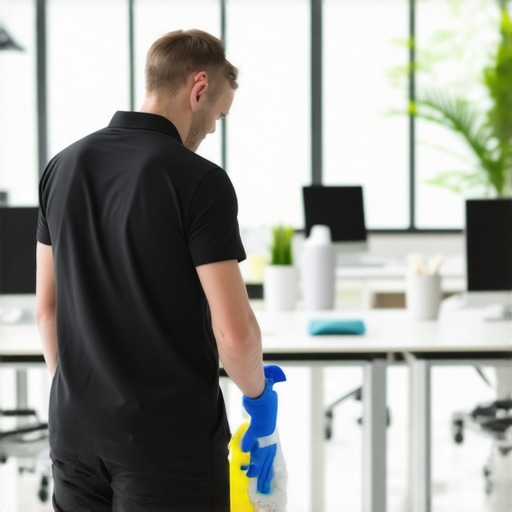
It was a typical Monday morning when I stepped into the office and immediately noticed the lingering smell of forgotten coffee and stale air. Despite my best efforts to tidy up, something just felt off. Then it hit me—my cleaning routine was superficial at best. I realized that if I wanted my workspace to be truly trustworthy and efficient, I had to go beyond the surface and embrace a deeper, more strategic approach.
Why a Deep, Trustworthy Clean Is Non-Negotiable
In today’s fast-paced work environment, cleanliness isn’t just about appearance—it’s about health, safety, and trust. A clean office fosters confidence among employees and visitors, encouraging productivity and collaboration. But here’s the catch: superficial cleaning can actually do more harm than good. It might make things look tidy temporarily, but it doesn’t eliminate germs or allergens that compromise health and trust. Early on, I made the mistake of thinking quick wipes and surface sprays were enough. Unsurprisingly, it didn’t take long before issues arose—from increased sick days to client complaints. That’s when I learned that a strategic, comprehensive cleaning approach is essential. Want to learn how to turn your office cleaning into a reliable trust-building process? Keep reading. For more on expert cleaning secrets, check out [here](https://purexhousecleaning.com/secrets-of-expert-house-cleaners-for-a-pristine-environment-with-ease).
Will Your Cleaning Routine Pass the Trust Test?
Many think that regular washing and mopping are sufficient. But the truth is, without proper sanitizing and smart techniques, your office might be a breeding ground for germs and allergens—undermining trust and safety. I used to believe that hiring cheap cleaning services was enough, but I soon discovered that cutting corners often leads to more problems. A wise colleague once told me, “Trust is built on visible, consistent cleanliness—nothing less.” Now, I make it a point to follow proven strategies, like those detailed in [this guide](https://purexhousecleaning.com/effective-deep-cleaning-sanitizing-strategies-for-a-safer-space-today), to ensure lasting results. If you’ve faced similar doubts or setbacks, you’re not alone. The next steps will help you ensure your cleaning routine is trustworthy and effective.
Plan Your Approach Just Like a Pro
Start with a clear plan, outlining zones that need attention and setting prioritized goals. I remember the first time I tackled my office’s deep clean; I broke down the space into sections, assigning specific tasks to each, much like mapping out a battlefield for strategic advantage. This methodology ensures that no area is overlooked, and the cleaning process becomes manageable rather than overwhelming.
Use the Right Tools and Break Down Tasks
Gather industrial-grade disinfectants, microfiber cloths, mops, and aspirators—think of them as your weapons for battle against germs and dirt. Begin by dusting surfaces with microfiber cloths to trap dust efficiently, then proceed to mop floors with disinfectant solutions. When I cleaned my conference room, I started with ceiling fans and high shelves, working my way down—visualize it as descending from the top of a mountain. This method prevents recontamination, much like clearing debris from a battlefield before the final sweep.
Deep Clean High-Touch Surfaces
Focus on door handles, light switches, keyboards, and phones. These are the battlegrounds where germs converge. I remember spending extra time on the keyboard of my shared computer, using a disinfectant wipe and a soft brush to remove hidden grime—akin to scrubing armor to ensure no vulnerabilities remain. Consider employing UV-C sterilizing devices periodically for an extra layer of security, which acts like a sterilization shield, boosting overall trustworthiness.
Sanitize with Precision and Frequency
Apply sanitizers that are proven-effective against pathogens, ensuring to leave surfaces wet for the recommended dwell time—think of it as giving the sanitizer enough time to do its job. I learned this the hard way when my quick wipe didn’t eliminate all bacteria; regular sanitization acts like a protective barrier, preserving the integrity of your space. Integrate scheduled deep sanitization sessions into your routine—consistency builds trust.
Clean Hidden and Hard-to-Reach Areas
Don’t neglect vents, behind furniture, or underneath appliances. These spots can harbor mold, dust, and bacteria. I once discovered a mold patch behind a bookshelf that had gone unnoticed for months—removing it was messy but essential. Use extendable tools and compressed air to access these tight spaces, much like using specialized equipment to clear out hidden tunnels.
Verify and Document Your Work
After cleaning, inspect each zone. Use swab tests or bacterial testers to verify cleanliness levels—like a quality control checkpoint in manufacturing. Take before-and-after photos to track progress, instilling confidence that your efforts yield trustworthy results. Set up a checklist to ensure each step was completed thoroughly, just like a pilot runs pre-flight checks.
Maintain Regular Deep Cleaning Cycles
Schedule recurring sessions—monthly or quarterly—to sustain the deep cleanliness. Think of it as routine maintenance for your vehicle; neglect leads to breakdowns, and the same applies to your space’s health and trustworthiness. Use insights from this guide to refine your process, ensuring consistency and trust with each cycle.
Incorporating these concrete steps transforms superficial cleaning into a strategic defense—building undeniable trust and ensuring safety. Remember, a deep clean isn’t a one-time effort but an ongoing commitment to excellence, much like maintaining a fortress against unseen enemies.
 Even experienced cleaning professionals know that misconceptions can undermine the effectiveness of deep cleaning routines. Many believe that a quick wipe or routine dusting is enough to guarantee a pathogen-free environment, but in reality, superficial cleaning often gives a false sense of security. One common myth is that disinfectants alone can compensate for poor cleaning practices; however, if the surface isn’t properly pre-cleaned, disinfectants won’t reach the germs hiding in dirt and grime. According to a study by the National Institute of Standards and Technology, pre-cleaning surfaces significantly enhances the efficacy of disinfectants, highlighting the importance of thorough preparation before sanitizing.
Another misconception is that cleaning frequency equals trustworthiness. While regular cleaning is vital, infrequent deep cleans and inconsistent routines can lead to the accumulation of hidden contaminants, especially in hard-to-reach areas like vents or behind furniture. Advanced mistakes include neglecting these areas altogether, which can harbor mold, dust, and bacteria—undermining trust in your cleaning efforts. To avoid these pitfalls, experts recommend adopting a strategic, scheduled approach, ensuring every nook and cranny receives proper attention. For tips on refining your routine, visit this guide.
Ever wondered why some spaces always seem cleaner despite similar routines? The answer often lies in the nuanced techniques used—like proper dwell times for sanitizers or the sequence of cleaning tasks. For instance, applying disinfectants without allowing enough contact time can leave surfaces inadequately sanitized. Why is this crucial? Because pathogens can survive short exposure periods. A deeper dive into expert strategies reveals that timing and methodical application are game changers in any comprehensive cleaning plan, boosting both effectiveness and trustworthiness. For more insights, check this resource.
Furthermore, a critical mistake often overlooked is assuming that cleaning alone suffices. Real trust in your environment comes from combining cleaning with ongoing sanitization, especially during flu seasons or pandemic concerns. Additionally, employing advanced tools like UV-C sterilizers or antimicrobial coatings can elevate your routine. However, without foundational practices—like correct dilution of solutions or systematic cleaning order—these innovations can be rendered ineffective. Remember, the devil is in the details, and paying attention to nuance ensures lasting results.
So, what’s a sneaky trap to watch out for? Relying solely on chemical disinfectants without mechanical cleaning can leave residues that attract dirt and reduce surface efficacy. It’s a trap that novice cleaners often fall into, believing their job is done once the disinfectant is applied. Robotic or superficial cleaning turns out to be not just ineffective but counterproductive, breeding complacency and false confidence. Always remember: meticulous prep work enhances chemical action. Want to master these nuances? Dive into this guide for pro-level tips.
By understanding and respecting the complex dance of dirt, germs, and cleaning techniques, you’ll build routines that inspire trust and ensure safety. Superficial practices are traps hiding beneath the surface—so for truly trustworthy results, embrace comprehensive, nuanced, and strategic cleaning. Have you ever fallen into this trap? Let me know in the comments.Maintaining a high standard of cleanliness over time requires more than just good intentions; it demands reliable tools and a disciplined approach. Personally, I swear by the **Microfiber Tech Pro** — these cloths are exceptional at trapping dust and microbes without leaving lint, making daily maintenance more effective and less time-consuming. For larger surfaces, my go-to has become the **E-Force Electric Mop**, which uses spinning microfibers under high-speed rotation to lift dirt effortlessly from tile and hardwood floors, ensuring consistent results without excessive effort. Using such equipment consistently has revolutionized my routine, saving both time and energy while reinforcing trustworthiness in the cleanliness achieved.
On the sanitization front, I prefer **Purex Ultrasonic Disinfectant Sprayers** because their advanced ultrasonic technology creates ultrafine, even misting that penetrates cracks and crevices—something traditional spray bottles can’t match. This investment is worth it, especially when tackling hard-to-reach areas or preparing spaces for high-traffic days, as it guarantees comprehensive disinfecting every time.
The software component plays a role too. I utilize **CleanSchedule**, a cloud-based cleaning management system that allows me to set recurring tasks, track completed jobs, and generate compliance reports. This ensures long-term consistency, keeps my standards transparent, and builds confidence with clients.
Prediction-wise, I believe that the future will lean heavily toward integrated AI-enabled cleaning systems, akin to smart robots that can autonomously monitor, clean, and sanitize environments while providing real-time data on space conditions. Embracing such innovations now, like adopting IoT-enabled sensors for air quality or surface contamination, will future-proof your maintenance routine.
**How do I maintain equipment and methods for lasting effectiveness**? Regular calibration of tools, scheduled deep cleans of machinery, and ongoing training for staff are non-negotiables. For example, I set monthly calibration checks for my ultrasonic sprayers to ensure optimal disinfectant dispersion. Additionally, following a detailed protocol from [this guide](https://purexhousecleaning.com/step-by-step-guide-to-professional-house-cleaning-in-2025) helps me keep methods sharp and reliable.
Don’t overlook the importance of documenting your process—keeping logs of maintenance and cleaning schedules makes it easier to spot and address potential issues early. I recommend setting aside a quarterly review to assess your tools, refresh your training, and incorporate any new technologies. Remember, consistent performance hinges on both the right equipment and disciplined routines. I encourage you to try implementing a scheduled calibration of your disinfecting equipment—this small step can significantly boost your results and trustworthiness.
The Little Lessons That Changed Everything
One of the most profound lessons I learned was that superficial cleaning creates a false sense of security. A quick wipe can hide stubborn germs lurking beneath the surface, leading to complacency. Real trust comes when you accept that deep cleaning demands meticulous effort, from proper tools to consistent routines. I realized that skipping hidden spots like behind furniture or vents is like leaving the enemy’s spies unchecked—trust in your environment diminishes. The third lightbulb moment was understanding that integrating new technologies, such as UV-C sterilizers, isn’t just a fancy upgrade but a way to elevate your trustworthiness remarkably. These insights taught me that in deep cleaning, the devil truly is in the details, and embracing that mindset has been transformative.” ,

http://Jameson%20Carter
I really appreciated this comprehensive approach to office cleaning. It’s easy to get complacent with quick surface wipes, but your emphasis on deeper, strategic cleaning really hits home. I’ve found that investing in tools like UV-C sterilizers and microfiber cloths makes a noticeable difference in both confidence and actual cleanliness. The point about verifying results through swab tests and documenting progress is often overlooked but so critical for maintaining high standards. I started using a digital checklist app for my cleaning routines, and it helped me stay consistent and spot any gaps early. Do you think automation with AI-powered cleaning robots will become standard in the future, or are there limitations we should consider? I’d love to hear what others think about integrating high-tech solutions into routine office sanitation.
http://Madeline%20Scott
Reading through this post really made me reflect on my own office cleaning routines. Superficial wiping can definitely give a false sense of security, especially in shared spaces where germs can hide behind the obvious surfaces. I’ve found that implementing scheduled deep cleans, especially targeting high-touch areas like door handles and keyboards, makes a big difference in creating a safer environment. What’s been challenging for me is keeping everyone consistent with the routine, especially when it’s easy to overlook areas like vents or under furniture. I noticed that some professional-grade tools, like UV-C sterilizers, are starting to be more accessible for small businesses, which is encouraging. It raises the question—how do others manage to keep their deep cleaning protocols disciplined over time? Do you rely more on tech, checklists, or perhaps staff training? I’d love to hear how others maintain high standards consistently without slipping into complacency.