I still remember the first time I really tried to deep clean my home. I spent hours scrubbing every corner, only to realize later that I hadn’t used the right disinfectants or techniques. The result? A sparkling surface that still harbored germs and allergens. It was a lightbulb moment for me—deep cleaning isn’t just about making things look good; it’s about ensuring safety and trust in your environment.
Why Getting Deep Cleaning Right Matters More Than Ever
In 2024, our homes and workplaces are more than just spaces; they’re sanctuaries from a world that’s still navigating health uncertainties. Proper deep cleaning and sanitizing protect us from unseen threats—germs, bacteria, and allergens—that lurk in everyday clutter. According to the CDC, regular sanitizing can significantly reduce the risk of infection, especially in shared spaces. Yet, many of us still rely on outdated methods or quick fixes that don’t really do the job.
My mistake early on was believing that a quick spray of disinfectant was enough. I overlooked proper contact time, which is crucial for sanitizers to work effectively. That’s why I want to share proven strategies that actually deliver trusted results, whether you’re cleaning your home or office. This isn’t about hype; it’s about consistency, knowledge, and a few insider tips I’ve picked up along the way. Want to avoid my rookie mistakes? Keep reading.
Is All Sanitizing Created Equal? The Truth About the Hype
Many people think that any cleaning product will do. I used to be one of them—until I realized that not all disinfectants are effective against all germs, especially without proper application. For example, some products require a specific contact time to eradicate viruses and bacteria. Failing to follow these instructions is a common mistake that weakens your efforts.
Trust me, I’ve been there. I once used a spray that claimed to disinfect everything instantly, only to find out it wasn’t effective because I didn’t let it sit long enough. That’s why understanding the science of sanitizing and choosing the right products makes all the difference. If you want to learn more about trusted cleaning routines, I recommend checking out essential house cleaning tips to build a solid foundation for your cleaning strategy.
Now, let’s dive into practical, step-by-step methods that will help you achieve reliable, trusted results every time you deep clean, so you can breathe easier and feel confident in your environment.
Start With a Clear Plan and Gather Your Supplies
Before diving into deep cleaning, define your target areas and gather all necessary supplies—disinfectants, microfiber cloths, brushes, gloves, and masks. I once attempted to clean my kitchen in a rush, only to realize I was missing the right disinfectant for my countertops. Preparing everything beforehand ensures efficiency and thoroughness, preventing the need to stop midway.
Pre-Treat and Declutter
Remove clutter and pre-treat stubborn spots with specialized cleaners. For example, I once sprayed a greasy stove with a degreaser and let it sit for 10 minutes. This step helps break down grime, making scrubbing easier and more effective. Think of it like softening hardened clay before shaping — it saves time and effort.
Use the Right Tools and Techniques
Microfiber cloths trap dirt better than old rags, and brushes reach into corners the cloth can’t. When cleaning my bathroom tiles, I used a stiff brush to scrub grout lines, which I missed with a sponge. Proper tools combined with correct techniques ensure no spot is overlooked and germs are eliminated effectively.
Pay Attention to Contact Time
Most disinfectants require a specific contact time—usually 1-10 minutes—to kill germs. I once sprayed a disinfectant and wiped it off immediately, which rendered it ineffective. Follow product instructions precisely—set a timer if needed—to guarantee trusted results. For high-touch surfaces, like doorknobs and light switches, this step is crucial.
Focus on High-Risk Areas
Prioritize cleaning areas where germs are most likely to spread. Kitchen sinks, bathroom fixtures, and remote controls are hotspots. I learned this the hard way when I neglected the remote, only to find it covered in bacteria. Regularly disinfect these points with proven products—check out trusted methods at top sanitizing methods.
Deep Clean Soft Surfaces
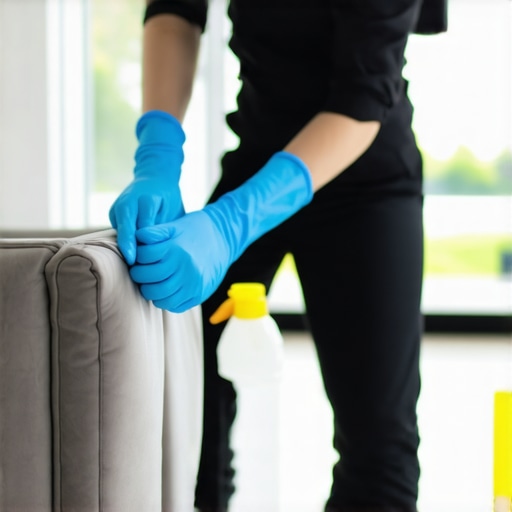
Mattresses, upholstery, and curtains trap allergens and bacteria. Use steam cleaners or appropriate fabric disinfectants. I once used a handheld steamer on my sofa, which not only cleaned but also refreshed the fabric. Soft surfaces often hide unseen dirt and require special attention for comprehensive sanitation.
Properly Disinfect and Rinse
After scrubbing, apply disinfectants and leave them to sit for the recommended time. Then, rinse surfaces with clean water if necessary. I once missed rinsing my kitchen counters, leaving residue that attracted more dirt. Following through ensures the surface remains safe and clean.
Final Touches and Ventilation
Finish by wiping surfaces dry and ventilating the space to eliminate chemical fumes. Open windows or run fans—this improves air quality and quickens drying. I remember cleaning my home office late at night, and proper ventilation made the space feel fresh and safe for the next day.
Adopt these targeted steps, and you’ll see trusted results with every deep clean. For detailed routines, check out step-by-step cleaning guides that can elevate your process further.
While many of us believe we’re doing a thorough job when deep cleaning, there’s a common misconception about what truly makes a cleaning routine effective. The truth is, some widely accepted practices can actually undermine your efforts or create hidden risks. Let’s dig deeper into these nuances to ensure your cleaning methods are both safe and reliable.
Why Relying on Cheap Disinfectants Can Backfire
One of the biggest myths is that any disinfectant will do, especially if it smells strong or claims to be ‘kills 99.9% of germs.’ However, many inexpensive or poorly formulated products lack the necessary ingredients to effectively eliminate viruses and bacteria. For instance, alcohol-based disinfectants with at least 70% alcohol are proven to inactivate most pathogens, but some products fall short of this standard. Using the wrong disinfectant or one that doesn’t specify germicidal properties can give a false sense of security.
Always check for credible certifications and ensure the product has the appropriate EPA registration. For detailed routines, you can refer to essential house cleaning tips.
The Danger of Premature Wiping and Insufficient Contact Time
A common mistake is wiping surfaces immediately after spraying disinfectant, thinking that’s enough. In reality, most disinfectants require a specific contact time—often between 1 to 10 minutes—to effectively kill germs. Rushing this step or wiping off the solution too soon renders the disinfectant ineffective, leaving your surfaces contaminated despite your efforts.
To avoid this, follow the instructions precisely and consider setting a timer. This simple step can significantly enhance your cleaning outcomes and trustworthiness of the process. For more advanced techniques, check out deep cleaning sanitizing strategies.
Can You Overclean and Why That Might Be a Mistake
Interestingly, over-cleaning or excessive use of harsh chemicals can damage surfaces and even weaken your immune system by disrupting natural microbial balance. While it might seem counterintuitive, some experts recommend a balanced approach that prioritizes high-touch areas and soft surfaces, rather than obsessively disinfecting every inch of your home.
Research from microbiologists suggests that a diverse microbial environment can actually promote health by strengthening immune responses. Therefore, focusing on effective, targeted cleaning rather than blanket sterilization can offer better results in the long run. For guidance, visit secrets of expert house cleaners.
What About the Hidden Risks of Chemical Fumes?
Many overlook the potential hazards of chemical fumes from cleaning products. Prolonged exposure to strong disinfectants can cause respiratory issues, skin irritation, or allergic reactions. Ventilating your space during and after cleaning is crucial, yet it’s often neglected.
Proper ventilation not only ensures your safety but also helps chemicals dissipate quickly, leaving your environment fresh and safe. Check out effective house and office cleaning solutions for safer alternatives and tips.
Have you ever fallen into this trap? Let me know in the comments. The more we share these insights, the better we can master deep cleaning routines that truly protect and trust our spaces.
Keeping your deep cleaning efforts consistent and effective requires not just knowledge but also the right tools and maintenance strategies. Over time, even the best equipment can wear out or become less effective, so knowing how to care for and upgrade your cleaning arsenal is vital for long-term trustworthiness of your environment.
Invest in Quality Equipment for Durable Results
In my experience, using high-quality tools makes all the difference. For example, I personally swear by microfiber cloths for their superior dirt-trapping ability and durability. Unlike cheap rags that fall apart after a few washes, premium microfiber cloths retain their cleaning power over hundreds of uses, saving money and ensuring consistent results. When choosing a vacuum, I recommend models with HEPA filters—these are essential for trapping allergens and fine dust particles, especially if you’re maintaining a home with sensitive occupants or pets. A good HEPA vacuum not only improves air quality but also reduces the need for frequent deep cleans.
Utilize Specialized Cleaning Solutions
Not all disinfectants are created equal. I make it a point to use EPA-registered disinfectants with proven efficacy against viruses and bacteria. For soft surfaces, steam cleaners are a game-changer—they sanitize without chemicals and are excellent for mattresses, upholstery, and curtains. Investing in a reliable steam cleaner, like the Jiffy Steamer or Dupray, guarantees that I can tackle soft surfaces with confidence, knowing I’m applying a safe, effective method. As technology advances, I predict even more eco-friendly, chemical-free options will become mainstream, making deep cleaning safer and more sustainable.
How do I maintain tools over time?
Maintaining your cleaning tools prolongs their lifespan and keeps them performing at peak efficiency. Regularly washing microfiber cloths at high temperatures removes dirt and bacteria, preventing cross-contamination. For vacuum filters, I recommend cleaning or replacing HEPA filters every 6-12 months—consult your device’s manual for specifics. Steam cleaners should be descaled periodically according to manufacturer instructions; this prevents mineral buildup that hampers steam quality. Maintaining your tools not only saves money but also ensures each cleaning session is as effective as the first.
Develop a Routine for Consistent Results
To keep your environment reliably clean, schedule regular maintenance checks on your equipment. For instance, I set reminders to inspect vacuum filters and descale my steam cleaner every three months. This proactive approach prevents surprises and ensures ongoing trust in your cleaning routines. Additionally, storing tools properly—such as hanging microfiber cloths or keeping steam cleaner parts dry—avoids mold and damage, extending their usability.
Looking ahead, the trend points toward smarter, connected cleaning devices that can self-monitor and alert you when maintenance is due. As IoT technology becomes more accessible, I believe we’ll see even more sophisticated tools that simplify upkeep and optimize cleaning schedules. For now, adopting a disciplined maintenance routine and investing in quality tools will significantly enhance your long-term results.
Try setting up a monthly check-in for your cleaning tools—it’s a small step that yields big trust in your environment’s safety. For detailed advice on maintaining your cleaning arsenal, check out essential house cleaning tips.
The Hardest Lesson I Learned About Trustworthy Deep Cleaning
One of the most impactful lessons I’ve had was realizing that superficial cleaning is a false economy. It’s tempting to rush through chores or rely on quick fixes, but I found that shortcuts often leave unseen germs behind, risking health and peace of mind. The lightbulb moment came when I discovered that effective deep cleaning hinges on understanding product contact times and proper technique, not just surface appearance.
My Essential Toolkit for Lasting Cleanliness
I trust high-quality microfiber cloths because they trap dirt and bacteria better than cheap rags, reducing cross-contamination over time. A reliable HEPA vacuum is also a staple, especially for homes with pets or allergy sufferers. For disinfectants, I always choose EPA-registered products with proven efficacy—this gives me confidence that I’m not just cleaning, but truly sanitizing. Lastly, a good steam cleaner offers chemical-free sanitation for soft surfaces, which is a game-changer for allergen control.
Believe in the Power of Consistency and Maintenance
Deep cleaning isn’t a one-time effort; it’s a routine. I set reminders to inspect and maintain my cleaning tools, like descaling my steam cleaner or replacing filters, to ensure each session is as effective as the first. Over time, this discipline has transformed my environment into a space I trust completely. As technology advances, I look forward to integrating smarter cleaning devices that monitor their own upkeep, making trust in my space even easier.
Your Turn to Trust Your Space
Building trust through deep cleaning is a journey of learning and adapting. By investing in quality tools, understanding product science, and maintaining a consistent routine, you can create a space that’s safe and reliable. Remember, trust is built one thorough, intentional clean at a time. Ready to elevate your cleaning game? Start today and see the difference trust makes.
What’s the biggest deep cleaning challenge you’ve faced, and how did you overcome it? Share your experience below—I’d love to hear your story!